Pusoy ZingPlay - 13 cards game
- 4.1
- Rating
- 5.00M
- Installs
- Free
- Price
 Analysis by App-foxy
I enjoy card games that reward a quiet plan more than a quick tap, and Pusoy ZingPlay fits that preference better than many casual card apps. It is a competitive 13-card game from VNG ZingPlay Studio, built around arranging a hand into the strongest possible structure before the comparison begins. The basic idea is easy to understand, but the decisions become much less obvious once every card has to serve a purpose. A promising hand can turn awkward in seconds if I protect one combination and weaken the other two.
The game is free to install and sits in the card category, with a Teen content rating. Its store summary focuses on testing strategy and arranging 13 cards, which is a fair description of the central challenge, but it does not really explain where the tension comes from. This is not simply a game of recognizing a good hand. I have to judge balance, risk, timing, and the likely strength of the opposing arrangement. That makes it a useful choice for short sessions when I want something more thoughtful than a fully automatic casual game.
How the current version feels to play
The current version is listed as 4.21.362, and the app has been available since November 20, 2018. That long presence matters because Pusoy ZingPlay is not trying to introduce the basic idea of 13-card play to the world for the first time. It feels like an established mobile interpretation of a familiar competitive format, aimed at people who already understand the appeal of arranging a hand and at newcomers willing to learn through repeated rounds.
You May Also Like

 Blood Strike: 2.5 Anniversary
Blood Strike’s Loadouts Turn Every Drop Into a Tactical Gamble
A close look at Blood Strike’s custom loadouts: how fast access to signature weapons reshapes its battle royale rhythm, rewards preparation, and narrows the gap between fights.

 Pandora - Music & Podcasts
Pandora’s Music Is Easy to Start, but Harder to Recover
Pandora’s strength is its low-effort path from a seed to a station. Its weak spot is how much confidence it asks you to place in connection, setup, and quiet recovery.

 8 Ball Pool
 Is Built on Rivalries, Rematches, and Routine
A close look at the rivalries, rematches, shared routines, and unanswered safety questions that turn a quick pool match into a persistent mobile community.

 Samsung Music
’s Quiet Strength Is Playing What You Already Own
Its reach comes less from spectacle than from dependable access to a personal library. That simplicity is both the app’s strongest retention engine and its ceiling.

 AccuWeather: Weather Radar
AccuWeather Review: A Quick, Clear Forecast for Everyday Decisions
For everyday plans, the best forecast is the one you can understand quickly. AccuWeather makes rain timing, radar, and local conditions easy to act on, with a few trade-offs.

 Hill Climb Racing
Why Hill Climb Racing Still Turns Crashes Into One More Run
A tiny car, a bumpy hill and one more upgrade: Hill Climb Racing keeps resurfacing because its simple chaos makes every near-miss feel personal.
More From Our News Desk



My first impression is that the central loop is pleasantly direct. I receive a hand, sort through the possible groupings, and decide how to divide the cards into the required sections. The difficult part is not knowing that stronger combinations are desirable. The difficult part is accepting that improving one section may make another section too weak. That trade-off gives each deal a small puzzle to solve rather than making the result feel decided by the first few cards.
The game works best when I slow down before committing to an arrangement. A common beginner mistake is to chase the most attractive combination immediately, such as keeping a promising pair or a possible sequence, without checking what remains for the other sections. I get better results when I first identify the cards that are unlikely to cooperate, then test several complete arrangements instead of polishing only one part of the hand.
That habit is especially useful during an everyday break. If I have a few minutes while waiting for an appointment, I can play a round without needing a long story, a large map, or a complicated control scheme. At the same time, I do not feel that the session is empty. Even a short game can leave me thinking about whether I overvalued one combination or failed to protect a safer arrangement.
The interface is most successful when it stays out of the way of that decision-making. Card games depend on quick visual reading, so crowded presentation or uncertain selection would be more damaging here than in a slower puzzle. I recommend spending the first few rounds learning how the game expects cards to be arranged and confirmed. That small investment reduces accidental choices and lets me concentrate on the hand rather than the controls.
The real skill is managing the whole hand
The most useful way to think about the game is as a three-part negotiation. I am not merely searching for the strongest individual group. I am trying to create an arrangement in which each section supports the others and the overall order remains valid. A spectacular top section is not helpful if it forces an unusable lower section, while a cautious arrangement may survive more often even when it lacks a standout combination.
One advanced habit is to compare complete plans before moving cards permanently. I look at a high-risk arrangement, a balanced arrangement, and a defensive arrangement, then ask which one depends on too many assumptions. This is more reliable than reacting to the first attractive pattern. It also makes losses easier to understand: sometimes the problem was not bad luck, but choosing a plan with no recovery path.
Another useful tip is to separate “possible” from “probable.” A hand may technically allow a strong sequence or group, but holding every card needed for that possibility can leave the rest of the arrangement weak. I prefer to keep a strong option when it does not damage the other sections. If it does, I treat it as a tempting gamble rather than an automatic choice.
I also pay attention to the order of the sections rather than evaluating them in isolation. A hand can look excellent when viewed as a collection of combinations but fail because the strength relationship between sections is wrong. Checking the complete hierarchy before confirming is one of the simplest ways to avoid an avoidable mistake, especially when playing quickly.
What the player base and history suggest
The app has passed five million installs and holds an average rating of 4.1 from roughly 73 thousand ratings. Those figures suggest a substantial audience rather than a niche experiment, and they help explain why the game feels designed for repeated competitive play instead of a one-time tutorial. There are also hundreds of written reviews, giving the app a visible history of player reaction rather than a completely new release with no track record.
I would not treat popularity as proof that every player will enjoy it. A large audience can confirm that the format is accessible, but it cannot remove the personal friction of card-game competition. Some people enjoy studying hands and learning from mistakes; others find repeated comparison stressful or dislike outcomes influenced by the deal. For the first group, the established audience is encouraging. For the second, a relaxed solitaire-style alternative may be a better fit.
The developer, VNG ZingPlay Studio, has kept the product in the mobile card-game space for years. The current version gives existing users a clear reference point when updating, but a version number alone does not tell me that every personal annoyance has been solved. I see it as evidence of continued product maintenance, not a promise that the experience has been transformed or that all future changes will suit every player.
How the evolution affects returning players
For someone returning after a long break, the main benefit of the current build is continuity. The core appeal remains recognizable: arrange the cards, make the hand coherent, and compete on the quality of the decision. That means previous knowledge is still useful. A returning player does not need to relearn the entire genre, although it is sensible to spend a few rounds checking the current flow before taking competitive play seriously.
New users should expect a learning curve that is more strategic than technical. The rules can be introduced quickly, but good decisions require pattern recognition and restraint. I would begin by treating early rounds as practice rather than judging the game by immediate results. Losing because I misread a hand teaches more than losing because I rushed through the arrangement, so reviewing the choice afterward is worthwhile.
Experienced players may notice that the mobile format changes their habits. On a physical table, I can spread cards widely and compare alternatives at a glance. On a phone, I may need more deliberate checking, especially on a smaller screen. I find that rotating attention between the three sections prevents tunnel vision. Instead of staring at the strongest combination, I repeatedly scan the full arrangement before confirming it.
The free entry also makes experimentation easier. I can try a conservative style, then a more aggressive style, without committing to a purchase simply to discover whether the game suits me. However, free access does not automatically mean unlimited comfort. The presence of in-app purchases, priced from $0.49 to $99.99 per item, means I would keep a clear personal spending limit and avoid treating paid items as part of the basic learning process.
Where it compares well with other card games
Compared with solitaire, this game offers more social and competitive pressure. Solitaire is usually better when I want complete control over the pace and no concern about another player’s arrangement. Pusoy ZingPlay is more engaging when I want my decisions judged against an opponent, but that same comparison makes a poor hand feel more frustrating.
Compared with fast arcade card games, it asks for more planning and less reflex. I do not need to tap rapidly or memorize a long sequence of actions. The challenge is choosing the least damaging compromise among several imperfect options. That makes it a stronger choice for thoughtful breaks, while a speed-focused card game may be better when I want instant action and minimal analysis.
Compared with offline versions of 13-card games, the mobile format is more convenient and easier to pick up whenever I have the phone nearby. The trade-off is that the screen can make card organization less comfortable, and the digital environment may include pressures that are absent from a purely offline deck. I prefer this app when convenience and competition matter more than the calm, tactile feel of physical cards.
It is also different from a traditional board-game app that lets players plan for a long time between turns. Pusoy ZingPlay keeps the focus on the hand in front of me. There is less room for elaborate long-term planning and more emphasis on reading the immediate arrangement. That limited scope is a strength for short sessions, but players seeking a deep campaign or a broad progression system should look elsewhere.
Limitations I would consider before installing
The biggest limitation is inherent to the format: the quality of my decision cannot completely control the result of a deal. I can arrange a weak hand intelligently and still lose to a stronger one. Players who need every match to feel fully determined by skill may find that discouraging. I enjoy the uncertainty when I treat each round as a probability problem, but I would not recommend the game to someone who dislikes luck in competitive card play.
The second issue is attention. A hand may look simple at first, yet a rushed decision can undermine the entire arrangement. This is not a game I would choose while multitasking heavily. Notifications, conversation, or a very small screen can make it easier to confirm a mediocre plan without checking the whole hand. If I only have enough focus for one-thumb tapping, a simpler casual game is likely the better option.
Monetization is another point to approach carefully. The game is free, but the listed in-app purchase range is wide, from small optional amounts to items costing up to $99.99. I would decide in advance whether I am comfortable spending anything and use the free experience to judge the game first. The important trade-off is not whether purchases exist, but whether they could change how I evaluate progress or pressure myself during competitive sessions.
The Teen rating is also relevant for families. I would not hand the game to a younger child without checking the device’s purchase controls and deciding whether the competitive format is appropriate. Teen-rated card play is not automatically unsuitable, but the combination of competition, digital spending, and repeated sessions deserves adult attention when the player is young.
Practical ways to get more from each session
I recommend using a three-pass routine. On the first pass, I identify obvious strong groups without moving anything. On the second, I build a balanced arrangement and check whether the sections follow the required strength order. On the third, I compare that plan with one riskier alternative. This takes only a little longer than acting immediately, but it exposes whether the attractive option actually improves the whole hand.
After a loss, I avoid asking only whether the opponent had better cards. I ask which decision created the largest weakness in my own arrangement. Sometimes I sacrificed too much for a flashy group; sometimes I protected a pair that had little value once the remaining cards were considered. This review habit turns ordinary matches into practice and helps me improve without needing a separate training mode.
I also suggest setting a session boundary before opening the app. Because the rounds are compact and the competitive loop encourages “one more game,” it is easy to continue after a frustrating result. A short limit keeps the game in its best role: a focused card challenge during spare time. If I am playing mainly to recover from a loss, my decisions usually become more reckless rather than more accurate.
For new players, the best early goal is not winning every hand. It is producing a legal, coherent arrangement consistently and understanding why it works. Once that becomes automatic, I can experiment with riskier choices. This order matters because advanced strategy is difficult to judge when basic arrangement errors are still masking the real strengths and weaknesses of the hand.
Who should try it and who should skip it
I would recommend it to players who already enjoy card puzzles, competitive table games, or the process of comparing several imperfect plans. It is particularly suitable for someone who wants a game that fits into short breaks but still rewards careful thought. The five-million-plus install base and established release history also make it feel like a mature option to investigate rather than an obscure experiment.
I would be more cautious about recommending it to people who want a purely relaxing experience. The competitive structure can make even a brief session mentally active, and the luck element may feel unfair when a carefully arranged hand meets a much stronger one. Someone who prefers predictable progress, story content, or a completely offline experience would probably be happier with a different card game.
It may also be a poor match for players who dislike in-app purchase environments. Although the game itself is free, the presence of paid items means I would not install it on a shared device without reviewing purchase protections. That is not a reason to reject the game automatically, but it is a practical condition for using it comfortably.
What I would watch in future updates
When I look at the current build, I am most interested in whether future updates continue improving clarity around card arrangement and session flow. Those details matter more to me than decorative additions because the game lives or dies by how confidently I can read the hand. A small interface improvement that prevents a mistaken confirmation would have more practical value than a flashy change that does not affect decision-making.
I would also watch how the balance between free play and purchases develops. The listed purchase range is broad, so future changes should ideally keep the basic strategic experience understandable for players who spend nothing. Clear boundaries would help the game remain welcoming to newcomers while still supporting people who choose optional purchases.
Finally, I would pay attention to whether the experience continues to serve both returning experts and first-time players. The strongest evolution would preserve the simple entry point while giving experienced players reasons to refine their choices rather than merely repeat the same routine. That is a difficult balance, but it is the area most likely to determine whether the app remains interesting beyond the first few sessions.
My overall view is positive, with sensible reservations. Pusoy ZingPlay turns a familiar 13-card format into a compact strategic challenge, and I like that the best play comes from managing the complete hand rather than chasing one impressive combination. Its free price makes trying it straightforward, while the Teen rating and in-app purchase range mean I would approach it thoughtfully on a family or shared device.
I would install it if I wanted competitive card play that rewards patience, comparison, and learning from mistakes. I would skip it if I wanted a fully relaxing solitaire experience, a story-driven game, or a card title with no luck or spending considerations. For the right player, its strongest quality is simple: every deal gives me a small decision puzzle, and the more carefully I examine the whole arrangement, the more satisfying the result becomes.
FAQs for Pusoy ZingPlay - 13 cards game
01What is Pusoy ZingPlay – 13 Cards Game?
Pusoy ZingPlay is a mobile card game based on the popular 13-card poker-style game commonly known as Chinese Poker or Pusoy. Players arrange their cards into three hands and compete against other players according to standard hand-ranking rules. The app focuses on quick matches, online competition, leaderboards, and a social experience designed for both casual players and card-game enthusiasts.
02How do you play Pusoy ZingPlay?
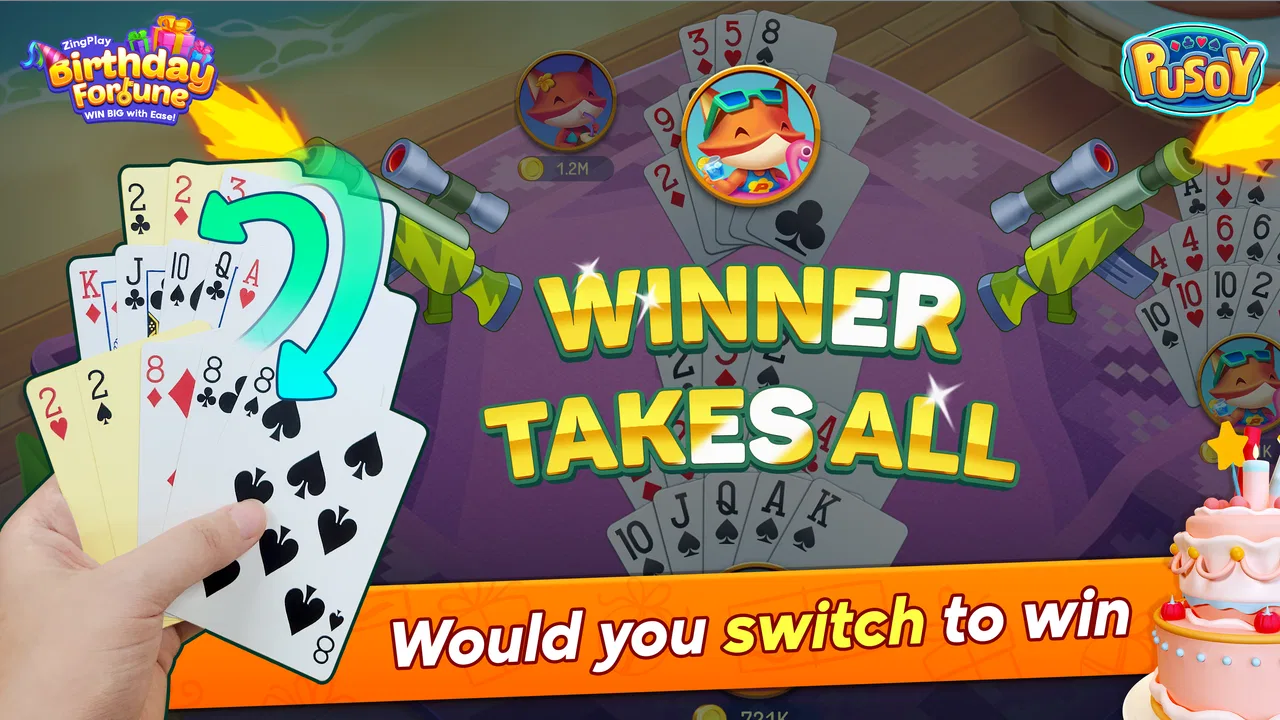
Each player receives 13 cards and must divide them into three separate hands: a five-card front hand, a five-card middle hand, and a three-card back hand. The hands must be arranged from weakest to strongest according to the game rules. After everyone submits their layout, the hands are compared, and the player with the better overall result wins the round. New players should practice arranging cards before entering competitive matches.
03Can I play Pusoy ZingPlay offline or without creating an account?
Pusoy ZingPlay is primarily designed as an online multiplayer game, so an internet connection is generally required for matchmaking, account synchronization, rewards, and competitive features. Depending on the current version, you may be able to try limited practice or guest options, but access can vary by device and region. Creating or linking an account is recommended if you want to protect your progress.
04Is Pusoy ZingPlay free to download and play?
The game is generally free to download, although it may include optional in-app purchases, virtual currency, advertisements, or other paid features. These purchases can sometimes provide additional resources or convenience, but they are not necessarily required to understand the rules or enjoy regular matches. Players should review the store listing and payment settings, especially if children use the device.
05Is Pusoy ZingPlay suitable for beginners, and what should I know before playing?
Pusoy ZingPlay can be suitable for beginners because the basic objective is easy to understand, but mastering card arrangements requires practice and strategic thinking. The game may introduce competitive opponents, rankings, timed decisions, and virtual rewards, which can make matches feel demanding. Before downloading, check regional availability, supported languages, privacy permissions, age guidance, and whether your device meets the app’s requirements.
Pros
- Smooth gameplay with responsive controls and quick card dealing.
- Multiple table options suit both casual players and competitive users.
- Social features make it easy to invite friends and join multiplayer matches.
- Clear card layouts help new players follow the action comfortably.
- Regular events can add variety and provide extra rewards.
Cons
- Requires a stable internet connection for most matches.
- Random matchmaking may sometimes create uneven skill levels.
- In-game purchases can influence access to certain benefits or items.
- Ads or promotional offers may interrupt the overall experience.
- Regional rules and table availability may differ between players.

Pusoy ZingPlay - 13 cards game
Gallery